Image: Artwork image rights managed by holding institution; source link provided
View source →Guitar, Sheet Music and Glass
Pablo Picasso, 1912
Technical Details
Medium
Collage and charcoal on board
Dimensions
47.9 × 37.5 cm (18.9 × 14.8 in)
Style
Cubism
Decade
1910s
About This Work
Created in late 1912, Pablo Picasso’s pioneering collage 'Guitar and Wine Glass' represents a monumental breakthrough in modern art and the invention of synthetic cubism. Measuring 47.9 by 37.5 centimeters, the work is constructed from collage and charcoal on board, assembling disparate elements including patterned wallpaper, newspaper clippings, and sheet music. Visually, Picasso fragments and reconstructs a café table setting, positioning a cut-out paper guitar alongside a wine glass and musical score. The overlapping planes and textured surfaces challenge traditional Renaissance perspective, dissolving the boundary between illusionistic representation and physical reality. By incorporating everyday printed matter and real-world ephemera into fine art, Picasso collapses high art traditions with popular culture. The tactile interplay of charcoal drawing and pasted paper creates a dynamic spatial rhythm, inviting viewers to decipher the complex interplay of abstract shapes, musical iconography, and structural form.
Following his intensive exploration of Analytic Cubism alongside Georges Braque, Pablo Picasso executed 'Guitar and Wine Glass' shortly after November 18, 1912, marking a watershed moment in the genesis of *papier collé* and modern collage. Created in Paris during a period of intense artistic experimentation, the work emerged as Picasso sought to break free from the monochromatic rigor and abstract opacity of early cubism by introducing literal fragments of the external world. The incorporation of real newspapers, sheet music, and commercial wallpaper reflected broader socio-political engagement, subtle commentary on the Balkan Wars reported in contemporary journals, and a witty democratization of artistic media. Acquired by museum founder Marion Koogler McNay in 1946 and entering the McNay Art Museum collection under inventory number 1950.112, the piece has been extensively analyzed by preeminent scholars such as Pierre Daix, William Rubin, and Rosalind Krauss. It fundamentally redefined twentieth-century aesthetics by demonstrating how humble, discarded materials could construct profound artistic meaning.
Current Location
McNay Art Museum, San Antonio, United States
Public Collection — Open to visitors
Visit museum website →Collection record status
Live institutional record fetched.
Source-linked entry contains a provenance or acquisition statement; full ownership-chain claims remain limited to the cited institution.
Image access: Permission required.
Valuation & Provenance
2026 Estimated Value
Public collection / market value not asserted
* Estimates are based on comparable auction results and market analysis. Not a formal appraisal.
Last Known Sale
No public auction record — held in permanent museum collection
Keywords
Continue Exploring
Related Artworks
Chosen for shared style, era, medium, subject, or date.
Fruit Dish, Bottle and Violin
1914 · same style · same era
Woman with Pears
1909 · same style · similar medium
Head of a Woman (Jacqueline)
1961-1962 · same style · similar medium

Bottle of Vieux Marc, Glass, Guitar and Newspaper
1913 · same era · similar medium

Guitar (Sheet Metal Sculpture)
1914 · same era · shared subjects
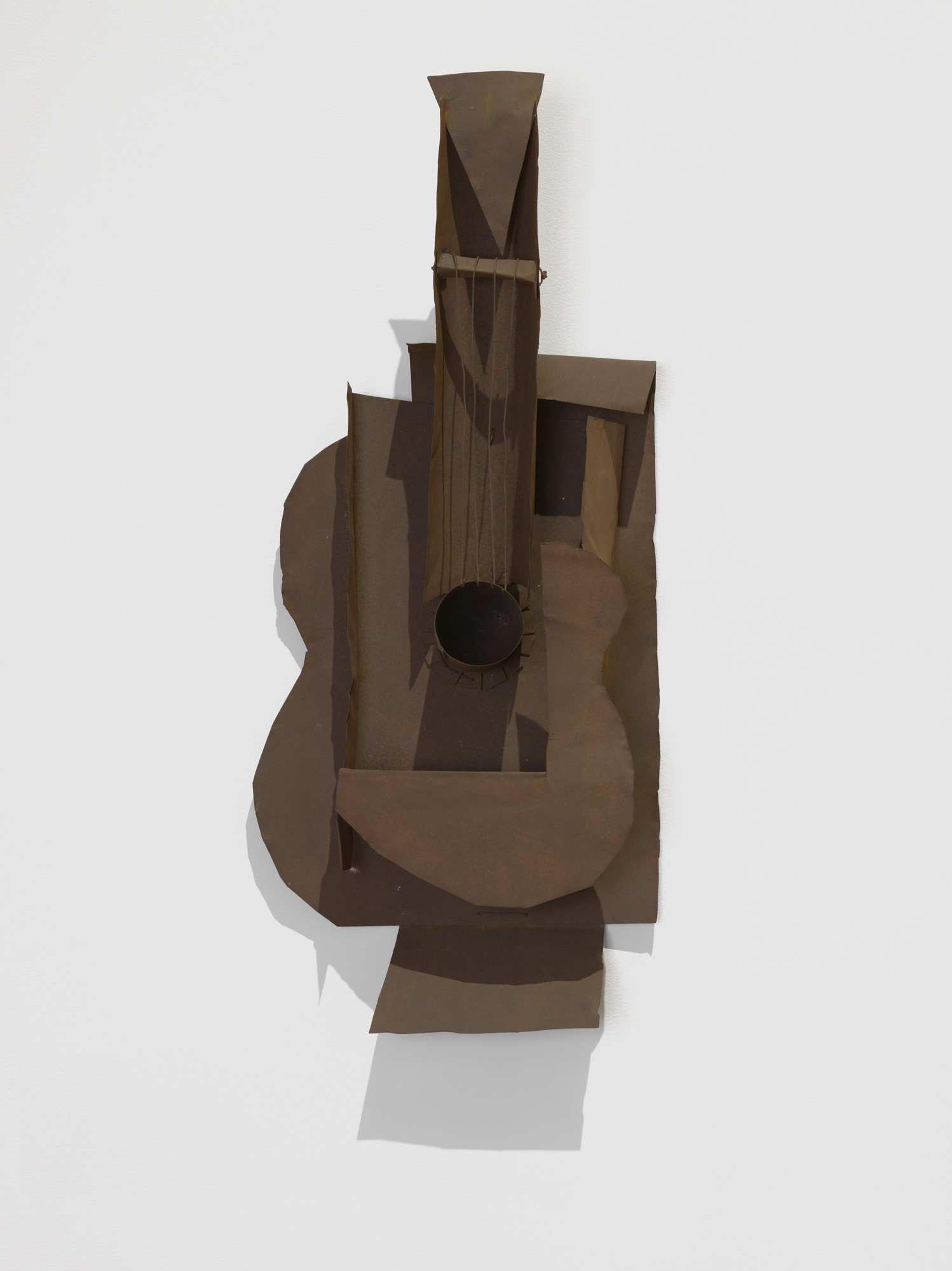
Guitar (Sheet Metal and Wire)
1914 · same era · shared subjects
Shop Related Products
If you love this synthetic cubism masterpiece, explore these curated books and resources on Amazon.
The Cubist Epoch by Douglas Cooper
In-depth analysis of Picasso's Cubist period and innovations
Cubism Series Posters
Collection of Cubist compositions showcasing geometric innovation
The Mystery of Picasso (Henri-Georges Clouzot)
Classic documentary showing Picasso painting in real-time
As an Amazon Associate, we earn from qualifying purchases. Each product link is unique to help us track which recommendations resonate most with our visitors.