Image: Artwork image rights managed by holding institution; source link provided
View source →Fruit Dish, Bottle and Violin
Pablo Picasso, 1914
Technical Details
Medium
Oil on canvas (unlined)
Dimensions
92 × 73 cm (36.2 × 28.7 in)
Style
Cubism
Decade
1910s
About This Work
Painted in 1914, Fruit Dish, Bottle and Violin is a quintessential example of Pablo Picasso’s transition into synthetic Cubism, housed in the National Gallery, London. Executed in oil on an unlined canvas measuring 92 by 73 centimeters, the composition initially appears entirely abstract before revealing distinct everyday objects. Moving upward from the lower edge, the viewer encounters a wooden table with curved legs, an off-white tablecloth adorned with grey tassels, the strings and stylized neck of a violin, fragments of a newspaper featuring the letters AL of JOURNAL, and a dish of fruit positioned at the apex. Picasso famously integrates mixed media techniques by incorporating sand into the dark paint layers to generate tactile surface texture. The artwork rejects single-point perspective in favor of multiple simultaneous viewpoints, viewing the table from both the side and above. Through balanced blocks of blackish-brown and white, along with rhythmic curves, Picasso establishes a harmonious, classical symmetry that playfully challenges perceptual recognition.
Created in 1914, Fruit Dish, Bottle and Violin marks a pivotal moment in the evolution of modern art, representing Picasso’s development of synthetic Cubism alongside Georges Braque. Unlike earlier analytic Cubism, which broke down forms into fragmented facets to examine objects from multiple angles, synthetic Cubism reversed the process by constructing or synthesizing imagery from flat planes, lines, and textures. By embedding everyday materials like sand directly into the paint surface, Picasso bridged the gap between painting and physical reality. The painting was formerly in the collection of Count Etienne de Beaumont and later acquired by the National Gallery, London, in 1979 from Marlborough Fine Art. It reflects a turbulent era in European history just as the First World War erupted, while simultaneously redefining the boundaries of still-life representation and establishing a lasting paradigm for twentieth-century avant-garde artistic practice.
Current Location
National Gallery, London, UK
Public Collection — Open to visitors
Visit museum website →Collection record status
Live institutional record fetched.
Source-linked entry contains a provenance or acquisition statement; full ownership-chain claims remain limited to the cited institution.
Image access: External source link or fallback.
Valuation & Provenance
2026 Estimated Value
Public collection / market value not asserted
* Estimates are based on comparable auction results and market analysis. Not a formal appraisal.
Last Known Sale
No public auction record — held in permanent museum collection
Keywords
Continue Exploring
Related Artworks
Chosen for shared style, era, medium, subject, or date.
Guitar, Sheet Music and Glass
1912 · same style · same era
Woman with Pears
1909 · same style · similar medium
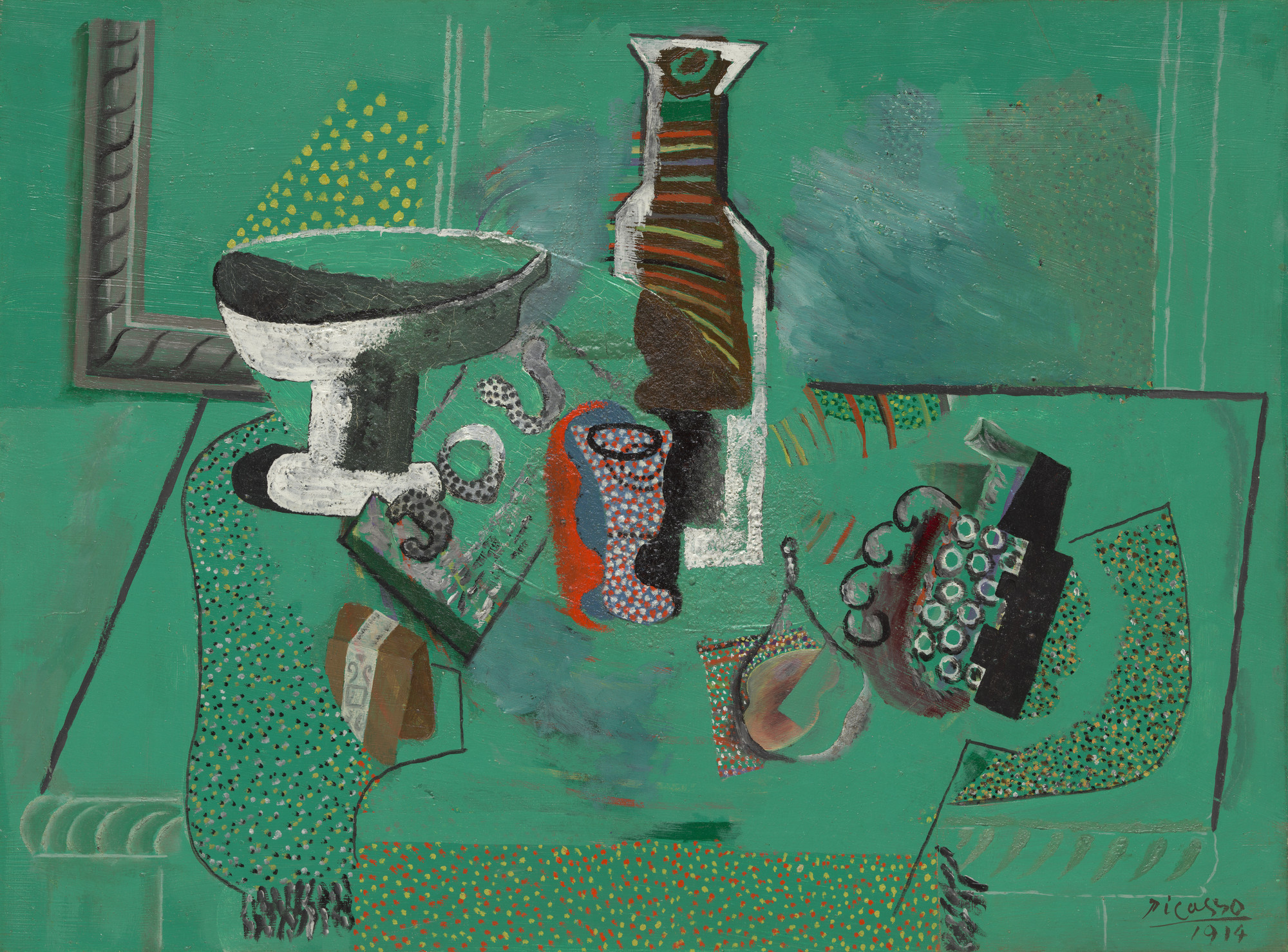
Green Still Life
1914 · same era · similar medium
Head of a Woman (Jacqueline)
1961-1962 · same style · similar medium

Bottle of Vieux Marc, Glass, Guitar and Newspaper
1913 · same era · similar medium
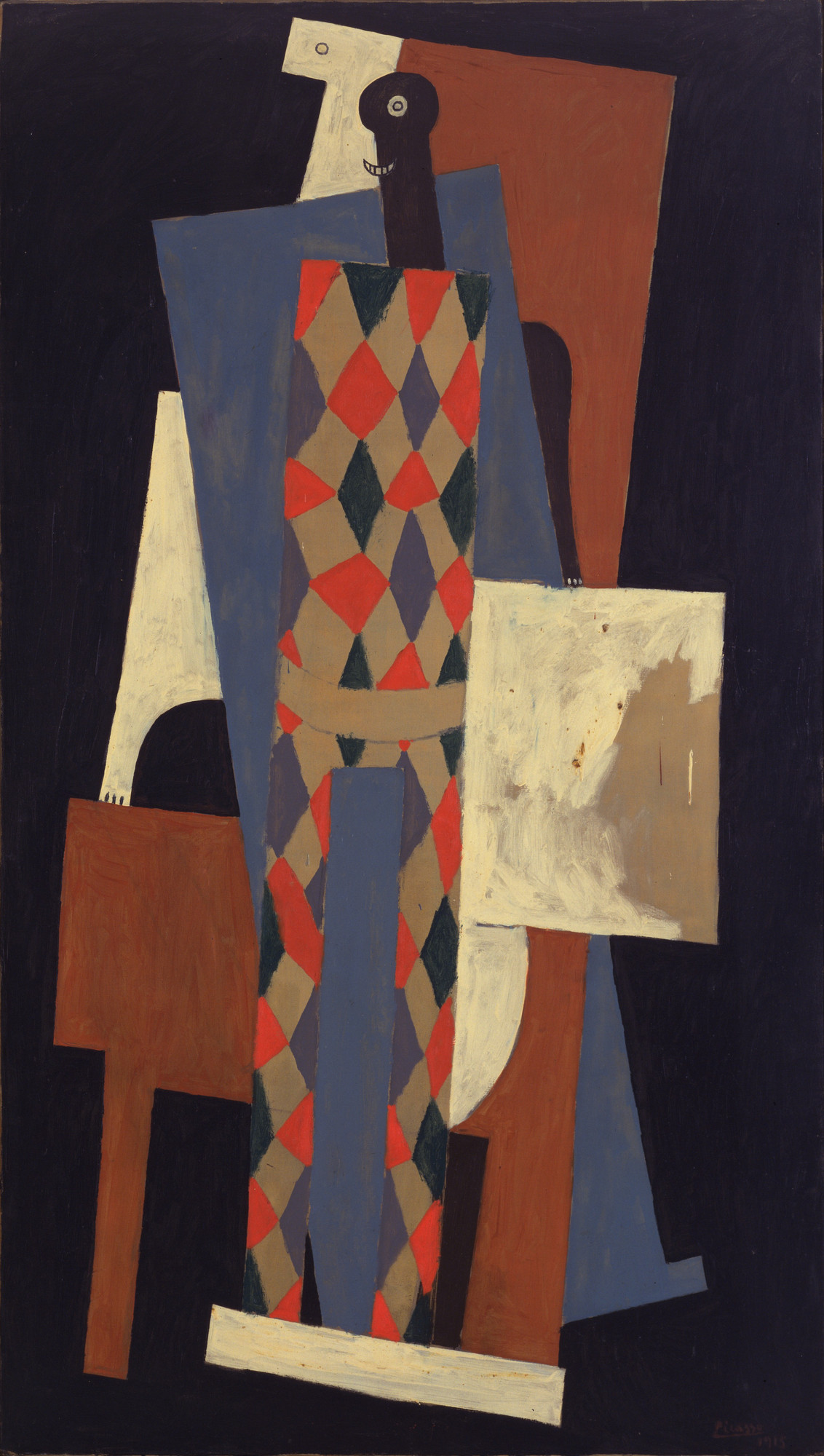
Harlequin
1915 · same era · similar medium
Shop Related Products
If you love this synthetic cubism masterpiece, explore these curated books and resources on Amazon.
The Cubist Epoch by Douglas Cooper
In-depth analysis of Picasso's Cubist period and innovations
Cubism Series Posters
Collection of Cubist compositions showcasing geometric innovation
The Mystery of Picasso (Henri-Georges Clouzot)
Classic documentary showing Picasso painting in real-time
As an Amazon Associate, we earn from qualifying purchases. Each product link is unique to help us track which recommendations resonate most with our visitors.